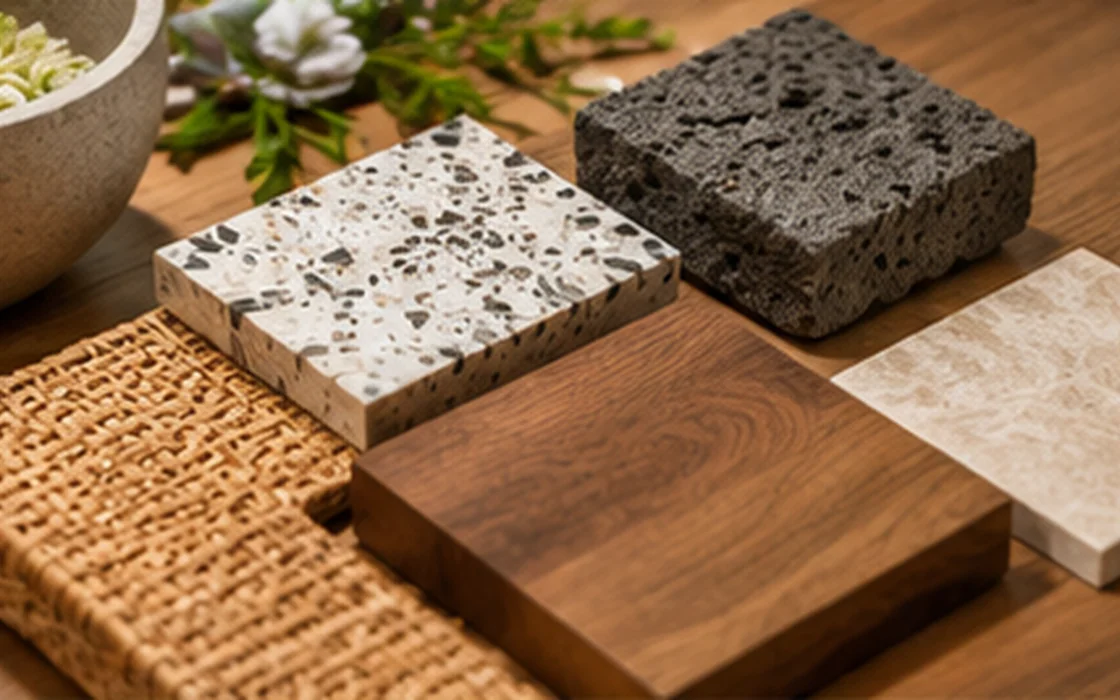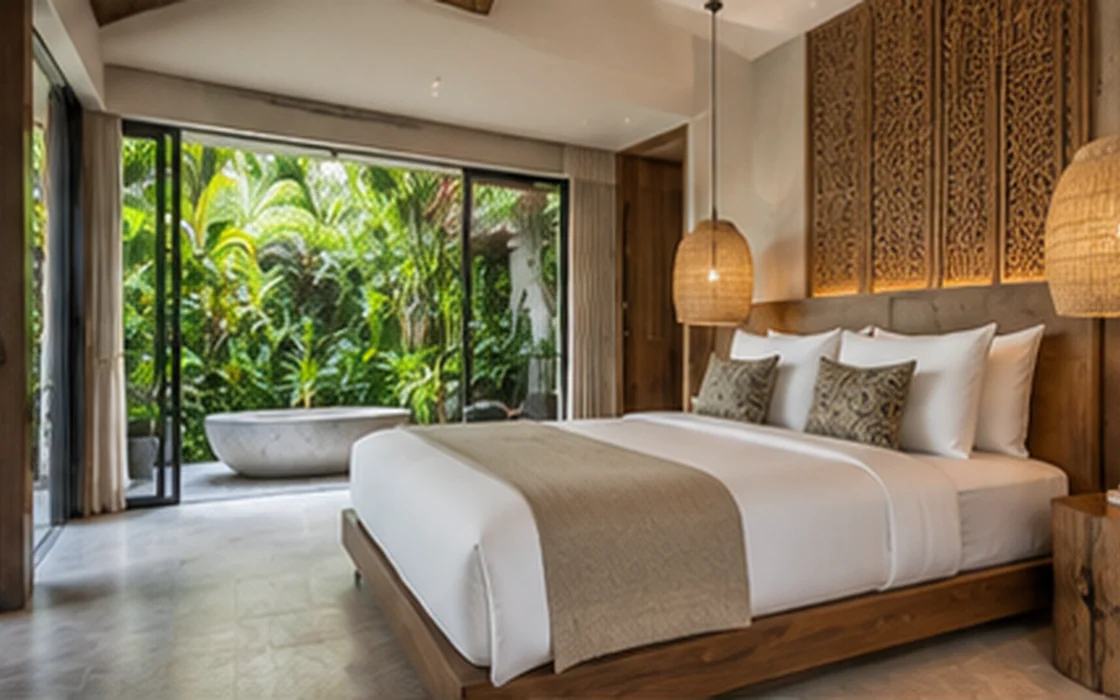
A Bali interior design company should view climate as a design input. Rain, humidity, strong light and indoor-outdoor circulation can expose weak specifications quickly. Rather than calling one material “the best,” match finishes to each room’s moisture, traffic and cleaning conditions. A beautiful sample in an air-conditioned showroom is only the start of a material decision.
Compare timber, stone, upholstery and metal details with humidity, UV exposure and maintenance in mind. Start with a defined brief, written responsibilities and a realistic review process rather than choosing by appearance alone.
Use location-specific material schedules
Differentiate fully sheltered bedrooms, partially open living spaces, wet bathrooms and outdoor terraces. Materials that perform well inside may fail beside a salt-laden coastal breeze or in direct rain. Create a finishes schedule that identifies each application, substrate preparation, cleaning method and expected maintenance.
Check timber and joinery details
Ask about timber seasoning, protective finishes, cabinet ventilation and edge sealing. Joinery near bathrooms, kitchen sinks or planted courtyards needs protection at joints and concealed surfaces, not only the visible faces. Review sample sections and hardware resistance; some failures begin behind doors before the front surface looks damaged.
Design for corrosion and fading
Metal fittings, door hardware and exterior-adjacent lighting deserve deliberate specifications, especially for coastal projects. Curtain fabrics and upholstery may need UV resistance; direct sun can change both colour and comfort. Confirm manufacturer documentation and sample performance for the actual exposure level rather than relying on vague labels.
Choose repairable finishes
Rental operators benefit from readily available replacement tiles, fabrics and chair components. Keep spare batches when practical and record product codes. Stone sealing, grout cleaning and upholstery care should be explained before handover. Materials are most sustainable when they can be maintained, repaired and used for many years.
What to review on the real project
Ask suppliers to show a small built example at the actual location when exposure is uncertain. A coated metal sample beside the pool and an upholstery swatch in afternoon sunlight can reveal practical questions that a showroom cannot. Include cleaning staff or property managers in the review. Their experience with stains, moisture and replacement cycles can make the specification more robust. Record the approved sample and expected maintenance routine so the finish is not judged only by appearance.
A practical project scenario
A timber vanity sample looks beautiful, but the installed design places unsealed edges near a shower. A detailed shop-drawing review adds protection and ventilation before the cabinet is built.
How to apply this guidance
At the next project review, begin by asking the team to rate exposure by room and surface. Then make time to check timber edges and hardware specifications. These are decisions that should be recorded in the brief or specification, not left as assumptions in a mood board. Before approving procurement or construction, review uv and coastal corrosion resistance and record cleaning and replacement instructions. Give one person responsibility for documenting the agreed outcome, note open questions and update the programme if a decision changes. For a Bali property, confirm humidity, maintenance and service implications wherever relevant. This process keeps creative decisions traceable through installation and handover.
Client decision checklist
- Rate exposure by room and surface
- Check timber edges and hardware specifications
- Review UV and coastal corrosion resistance
- Record cleaning and replacement instructions
Frequently asked questions
Is teak always the best timber for Bali interiors?
No. Performance depends on species, grade, sourcing, treatment, construction detailing and location.
Should every finish be waterproof?
No. Select appropriate moisture protection for the actual room and substrate, while allowing assemblies to perform as designed.