Good resort wayfinding starts with spatial clarity. A guest should understand how to reach guestrooms, dining, wellness and exits from the layout, views and landmarks—then use signage for confirmation rather than rescue.
Map guest routes and decision points; Use consistent destination names; Check sightlines in rain and darkness.
Identify decisions before designing signs
Walk the site from the arrival point and note every junction where a new guest must choose a direction. Map common trips: room to breakfast, room to pool, spa to changing area, and exit to transport. A sign on every wall creates noise, while a missing sign at one critical junction creates frustration. Prioritise decision points and keep destinations named consistently.
Use landscape and architecture as landmarks
A courtyard, planted wall or recognisable building form can help guests orient themselves. Consider how paths look in rain and after dark. Maintain sightlines at corners and confirm that planting growth will not conceal important guidance. For larger properties, staff and service routes can use a separate operational system without confusing guests.
Make information readable and inclusive
Contrast, type size, installation height and simple symbols help people understand information. Where relevant, plan language choices around the guest profile while using recognisable icons carefully. Consult accessibility and safety specialists about mandatory signs and routes. A beautiful custom typeface is not useful if guests cannot read it at the required distance.
Test the system with unfamiliar people
Invite someone who has not seen the plans to navigate from arrival to a guestroom, washroom and restaurant. Observe rather than guiding them. Repeat the exercise at night. Problems may come from a path that looks identical to its neighbour, an ambiguous room number or a sign installed too late along the route. Fix the spatial issue when possible.
Account for staff and deliveries
Guests are not the only people navigating the resort. Staff need efficient routes for deliveries and maintenance, while guests need intuitive access to amenities. Review intersections between these routes and aim to keep operational paths discreet without sacrificing safety.
Maintain the system after opening
Signs can become hidden by planting or damaged by weather. Record materials, mounting locations and replacement artwork so staff can maintain consistency. A wayfinding system is a living operational asset, not merely a graphic design project.
How this could work in Bali
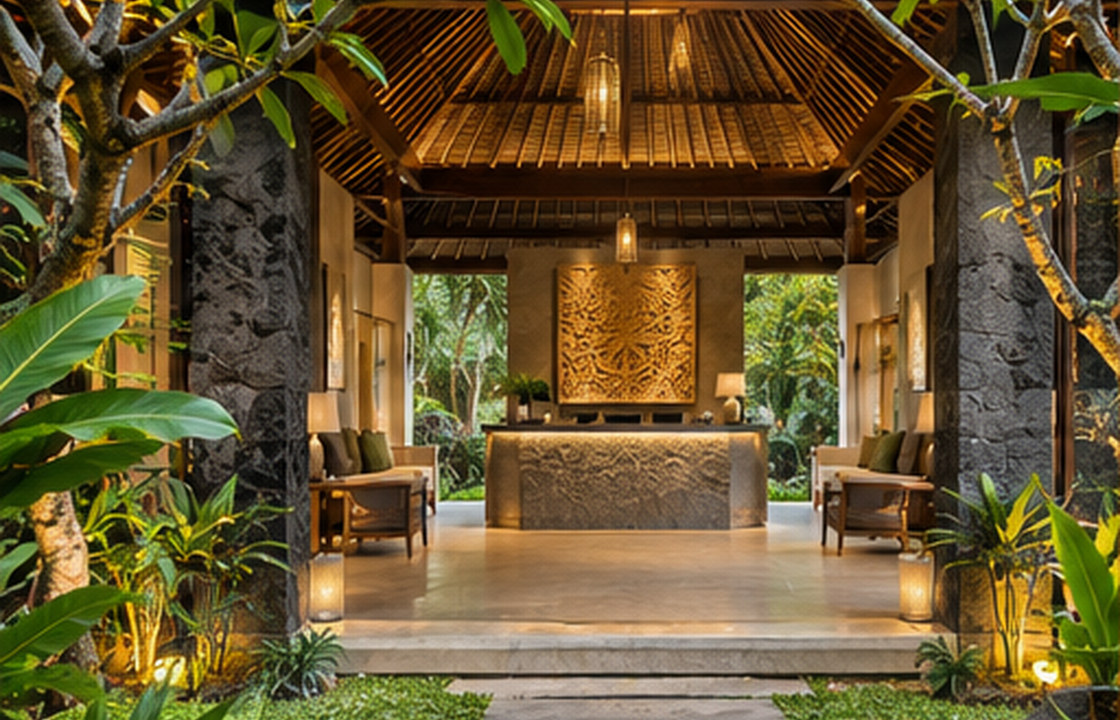
A landscaped resort in Ubud could use distinct courtyard identities and modest directional signs at key junctions. Guests would navigate through memorable places instead of following a continuous wall of arrows.
Balance experience and operation
Signs are relatively easy to add, but poor circulation is difficult to repair later. Invest first in legible paths, safe routes and recognisable landmarks.
Practical review checklist
- Map guest routes and decision points
- Use consistent destination names
- Check sightlines in rain and darkness
- Review sign readability and accessibility
- Conduct first-time guest walk-throughs
Turn this checklist into a coordinated review with the owner, operator, designers and relevant technical specialists. Confirm which items belong to the appointed scope before drawings, procurement or construction are authorised.
Frequently asked questions
What is the difference between signage and wayfinding?
Wayfinding is the full process of understanding a place; signs are one of the tools used to support it.
When should resort wayfinding be planned?
At concept and layout stages, before paths, landscaping and lighting are fixed.
How can a resort test wayfinding?
Ask unfamiliar visitors to navigate common routes independently, observe hesitation and revise both spatial cues and signs.
Moving from idea to a clear brief
A useful next step is to collect photographs of the existing site, a measured plan where available, an outline of users and operations, target timing and the decisions that remain open. A design consultation can then focus on scope, priorities and technical interfaces before materials and furniture are ordered. Local permissions and specialist requirements should be checked with appropriately qualified advisers.
Explore Interior Design Bali’s expertise, browse the project collection, or begin a project conversation.