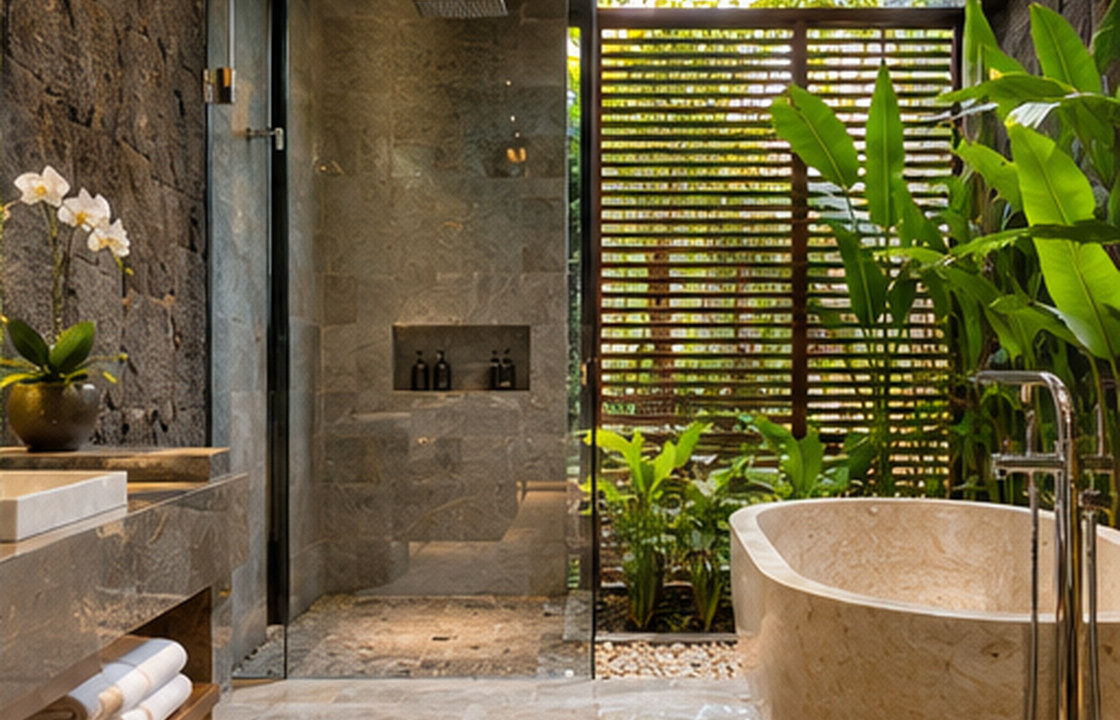
A durable Bali resort bathroom begins with water management, ventilation, cleaning access and reliable specifications—not a choice of fashionable tiles. Detail how the space is used and maintained before finalising its spa-like appearance.
Review drainage and waterproofing drawings; Test samples with water and cleaning agents; Confirm slip resistance where surfaces get wet.
Plan wet and dry zones realistically
The shower is the principal wet zone, but water can travel to the vanity, door and changing area. Consider shower orientation, door opening, splash control, floor falls and where towels will hang. Keep the route from bedroom to bathroom comfortable without introducing slippery thresholds. Walk through the room as a guest carrying toiletries and as a housekeeper cleaning every surface; both perspectives matter.
Specify complete waterproofing systems
A beautiful stone finish is not a waterproofing strategy. Coordinate substrates, membranes, joints, penetrations, drains and transitions with qualified specialists. Confirm compatibility among products rather than selecting components individually. Hidden water damage is especially costly in hospitality because a room may need to close for repairs. Keep the approved details, inspection records and product information in the project handover package.
Choose finishes for cleaning and moisture
Textured surfaces may give character but can trap residue if the texture is too deep. Natural stone may need specific sealing and care; some metals show wear or staining in humid or coastal conditions. Ask the operator what cleaning products are actually used and request samples exposed to water and routine cleaning. Check grout width, replacement availability and whether a finish remains safe when wet.
Ventilation and access are part of design
Moisture control requires a coordinated ventilation plan, especially in bathrooms without dependable cross-ventilation. Allow access for exhaust equipment, traps and shut-off points. Place mirrors and lighting to be useful without creating uncomfortable glare. Plan small ledges and storage so guests do not place wet bottles on every horizontal surface. Comfortable maintenance access protects the aesthetic investment over time.
Coordinate cleaning during design reviews
Invite the housekeeping lead to the sample bathroom. Ask how long everyday cleaning takes, where supplies are stored and which surfaces are difficult to reach. Corner joints, recessed shelves and unusual tapware should be evaluated for long-term use. A cleaning test can prevent an expensive change after dozens of identical rooms are installed.
Think beyond the photograph
The strongest bathroom photographs often show pristine open shelves and large mirrors, but real users need tissue, hooks, lighting, privacy and a place to keep toiletries dry. These functional items should be integrated with intention rather than hidden from design drawings and added after opening.
How this could work in Bali
An ocean-facing resort in Uluwatu can use warm textured stone and timber-look details, but should first test floor drainage, salt exposure, fan operation and cleaning methods against its actual guest turnover.
Balance experience and operation
The visual trade-off is between expressive porous finishes and a bathroom that remains easy to maintain. Consider using the most delicate material as a controlled accent, not across every wet surface.
Practical review checklist
- Review drainage and waterproofing drawings
- Test samples with water and cleaning agents
- Confirm slip resistance where surfaces get wet
- Check fan and plumbing service access
- File installation and inspection records
Turn this checklist into a coordinated review with the owner, operator, designers and relevant technical specialists. Confirm which items belong to the appointed scope before drawings, procurement or construction are authorised.
Frequently asked questions
Is natural stone suitable for resort bathrooms?
It can be, with careful material selection, installation and maintenance planning. Ask suppliers about porosity, sealing and cleaning rather than assuming all stone behaves alike.
What should be checked before tiling?
Substrate condition, waterproofing, falls, penetrations, drains and quality inspections should be agreed before finishes hide the work.
Can a bathroom look luxurious without expensive materials?
Yes. Good proportions, soft lighting, simple detailing and a dependable water-management system often deliver better lasting value than elaborate finishes alone.
Moving from idea to a clear brief
A useful next step is to collect photographs of the existing site, a measured plan where available, an outline of users and operations, target timing and the decisions that remain open. A design consultation can then focus on scope, priorities and technical interfaces before materials and furniture are ordered. Local permissions and specialist requirements should be checked with appropriately qualified advisers.
Explore Interior Design Bali’s expertise, browse the project collection, or begin a project conversation.