Effective guestroom lighting in Bali combines bright, practical illumination where guests need it with low-glare, individually controlled light for winding down. Plan the controls and bedside arrangement before selecting decorative fittings.
Draw a lighting circuit and switch plan; Test reading positions at both bed sides; Review curtains at morning and night.
Build several lighting scenes
A guest checks luggage, reads, showers and relaxes in the same room. One central fixture cannot serve all activities well. Start with ambient light for safe movement, task light at the mirror and writing surface, reading lights at each bedside position and soft night guidance if appropriate. Record switching scenarios for entry, occupied room and sleep. The guest should not have to search multiple walls to darken the space.
Protect the bed from glare
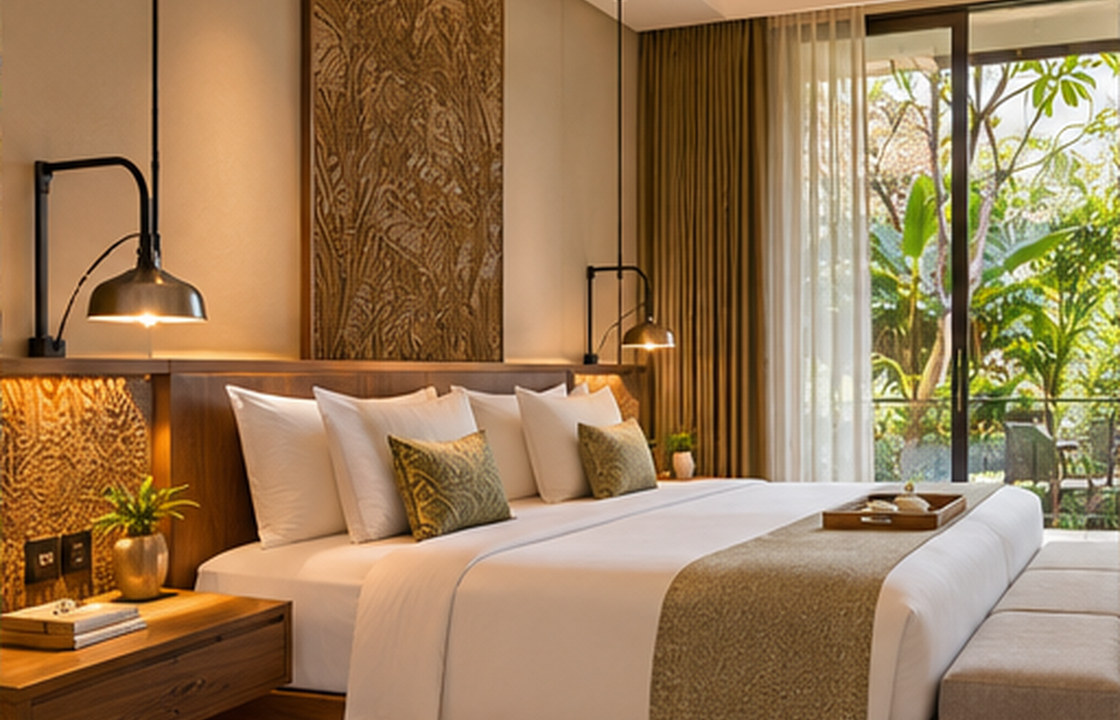
Guests often lie back and look towards fittings that seemed unobtrusive in a showroom. Locate downlights away from direct bed sightlines, shield reading lamps and avoid reflective decorative surfaces opposite the pillow. Check whether controls are reachable from the bed and whether both occupants can read independently. Test a full-scale sample room at night; rendered images rarely reveal glare or inconvenient switching.
Coordinate daylight and window coverings
Daylight contributes to the feeling of a Bali stay, but late-morning light can also interrupt sleep and heat up the room. Specify window treatments for privacy, light control and practical cleaning. Make sure curtain tracks clear air-conditioning equipment and doors. Where a window opens toward a shared walkway, use planting or screens without blocking necessary ventilation or safe access.
Think about maintenance and consistency
A hotel needs lamps, drivers and switches that can be maintained across many rooms. Different-looking fixtures may use the same readily available components, reducing replacement delays. Document colour appearance, dimming compatibility and the exact location of controls. The mock-up room should be signed off by design, operations and housekeeping so a decorative choice does not create an unnecessary maintenance task.
Make the controls intuitive
Guests should be able to turn off the primary room lights without learning a complex control system. Label unfamiliar switches clearly, avoid tiny touch panels as the only interface and provide a straightforward lighting scene for staff cleaning. Test the controls from the entry door and bedside with a person unfamiliar with the design.
Consider the entire sleep environment
Curtain hardware, corridor light leakage, bathroom door undercuts and noisy mechanical equipment can undermine a calm room even when bedside fittings are perfect. Coordinate lighting with architecture, acoustics and operations. A good guestroom experience comes from several small decisions that reinforce one another.
How this could work in Bali
For an Ubud retreat with garden-facing guestrooms, a warm bedside reading light, softly illuminated path to the bathroom and a well-shaded balcony opening create different experiences without making the room visually busy.
Balance experience and operation
The key choice is not between bright and dim rooms; it is between one inflexible scene and a layered system. Decorative pendants can provide identity, while modest, well-positioned task lighting provides daily comfort.
Practical review checklist
- Draw a lighting circuit and switch plan
- Test reading positions at both bed sides
- Review curtains at morning and night
- Confirm driver and lamp replacement access
- Approve an occupied-room lighting mock-up
Turn this checklist into a coordinated review with the owner, operator, designers and relevant technical specialists. Confirm which items belong to the appointed scope before drawings, procurement or construction are authorised.
Frequently asked questions
How many lighting layers does a hotel room need?
Usually several: general lighting, task lighting, bedside reading light and gentle night navigation where appropriate. The exact arrangement depends on the room and guest needs.
Are dimmers necessary in every hotel room?
Not always, but guests need intuitive control over the atmosphere. Dimmers or separate circuits can both work when installed and tested properly.
What is the biggest guestroom lighting mistake?
Selecting fixtures from photographs before checking glare, switch access and bedside use. A simple mock-up often reveals these issues early.
Moving from idea to a clear brief
A useful next step is to collect photographs of the existing site, a measured plan where available, an outline of users and operations, target timing and the decisions that remain open. A design consultation can then focus on scope, priorities and technical interfaces before materials and furniture are ordered. Local permissions and specialist requirements should be checked with appropriately qualified advisers.
Explore Interior Design Bali’s expertise, browse the project collection, or begin a project conversation.