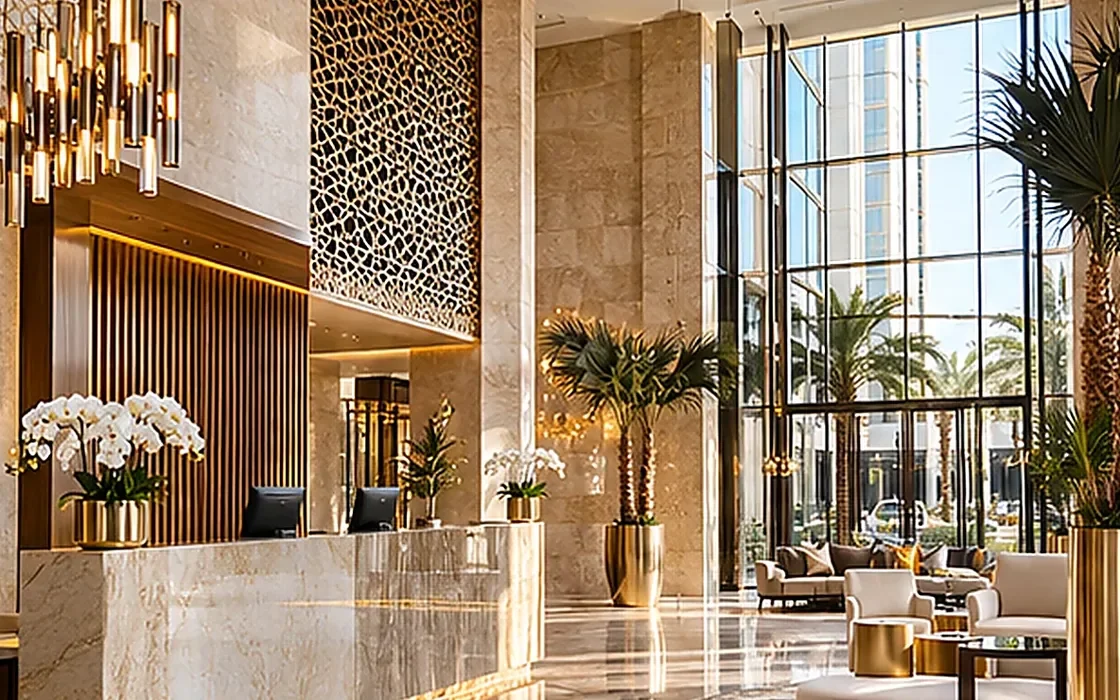
A hotel interior design company in Bali must consider the conditions faced by rooms and public areas every day. Poolside suites, garden pavilions and air-conditioned bedrooms have different levels of exposure. A coherent resort palette should therefore use several specifications, not one attractive material applied indiscriminately.
Choose resort furniture, fixtures and finishes for moisture, salt exposure, UV light and housekeeping cycles. Start with a defined brief, written responsibilities and a realistic review process rather than choosing by appearance alone.
Classify every area by exposure
Separate sheltered rooms, open-air dining, pool terraces and wet areas in the finishes schedule. Coastal locations may expose metals to corrosive conditions, while garden rooms need careful moisture and insect detailing. The right response comes from the actual site rather than an island-wide assumption.
Test commercial furniture performance
Guest furniture is used more frequently and by a wider range of people than typical home furniture. Review stability, fabric cleaning, finish repair and replacement availability. For upholstered pieces, confirm suitable test data with suppliers where important.
Link specification to housekeeping
Involve operators in sample reviews. A complex texture may be beautiful but difficult to clean between check-ins; a delicate surface might stain during regular breakfast service. Document approved cleaning chemicals and maintenance frequencies so finishes last as intended.
Build a replacement strategy
Use consistent components where operationally useful and keep supplier records for furniture, lamps and hardware. Consider spare batches or the ability to reorder locally. A strong FF&E schedule lists dimensions, codes, quantities, warranties and expected service access.
What to review on the real project
Create a maintenance matrix for guestrooms and public areas, listing the actual cleaning procedure, spare stock and repair method for each major finish. Review replacement needs over several years, not just the opening month. Ask suppliers whether the selected upholstery, lamp and hardware can be reordered reliably. These decisions make the resort more resilient during busy periods when shutting down a room for a minor repair is disruptive.
A practical project scenario
A resort wants untreated decorative hardware in pool-adjacent rooms. A materials review finds a more suitable corrosion-resistant finish and records maintenance requirements before purchasing.
How to apply this guidance
At the next project review, begin by asking the team to classify sheltered, outdoor and wet areas. Then make time to review commercial durability and cleaning tests. These are decisions that should be recorded in the brief or specification, not left as assumptions in a mood board. Before approving procurement or construction, involve housekeeping before procurement and keep a complete ff&e and spare-parts register. Give one person responsibility for documenting the agreed outcome, note open questions and update the programme if a decision changes. For a Bali property, confirm humidity, maintenance and service implications wherever relevant. This process keeps creative decisions traceable through installation and handover.
Client decision checklist
- Classify sheltered, outdoor and wet areas
- Review commercial durability and cleaning tests
- Involve housekeeping before procurement
- Keep a complete FF&E and spare-parts register
Frequently asked questions
Can indoor furniture be used on a covered terrace?
Only if it is specified for the actual exposure and maintenance conditions; shelter alone may not eliminate moisture.
What does FF&E mean?
Furniture, fixtures and equipment, typically documented with specifications, quantities and purchasing information.